
-1920w.webp)



.svg.png)


There's a version of this question we hear every week. "I get all my work from Google Maps and word of mouth. Why would I pay for a website?" It's a fair question. A good Google Business Profile does a lot. But it's worth being clear about what it is, and what it isn't.
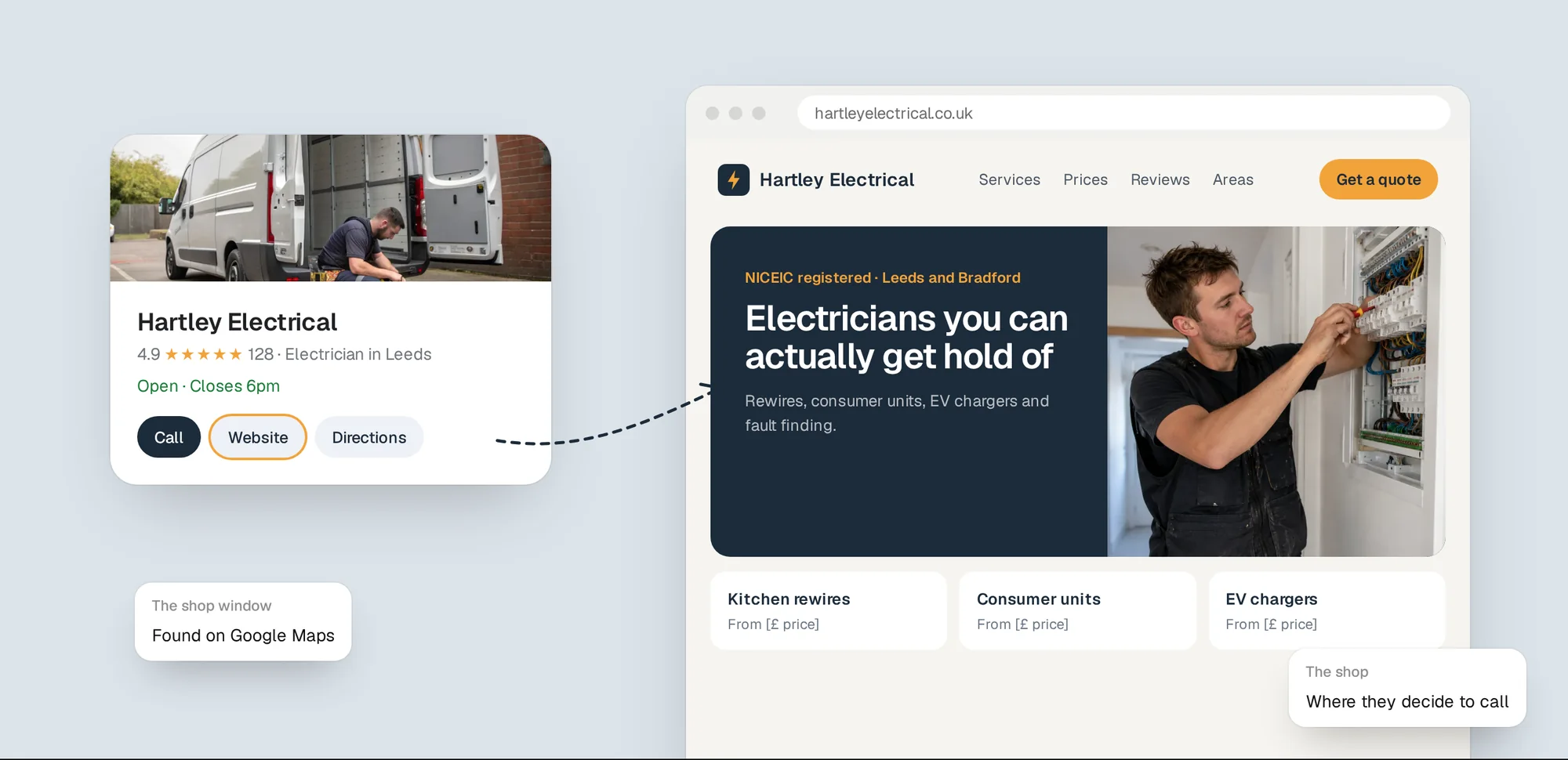
The profile is the shop window
Your Business Profile is how people find you. It puts you on Maps, shows your reviews and hours, and gives people a Call button. For a local trade, that's enormously valuable, and if you haven't set one up properly, do that first.
But a shop window isn't a shop. People look in, then decide whether to come through the door. For most customers, the door is your website.
 Found on Maps, checked on your website. Most customers do both before they call.
What happened to Google's free websites
Google used to offer this itself. Business Profile websites, the simple free pages on business.site addresses, let you publish a basic site straight from your profile. Thousands of trades used them.
In March 2024, Google turned them off. Visitors were redirected to the Business Profile instead, and Google said the redirect would only work until 10 June 2024. After that, links on vans, cards and invoices went nowhere.
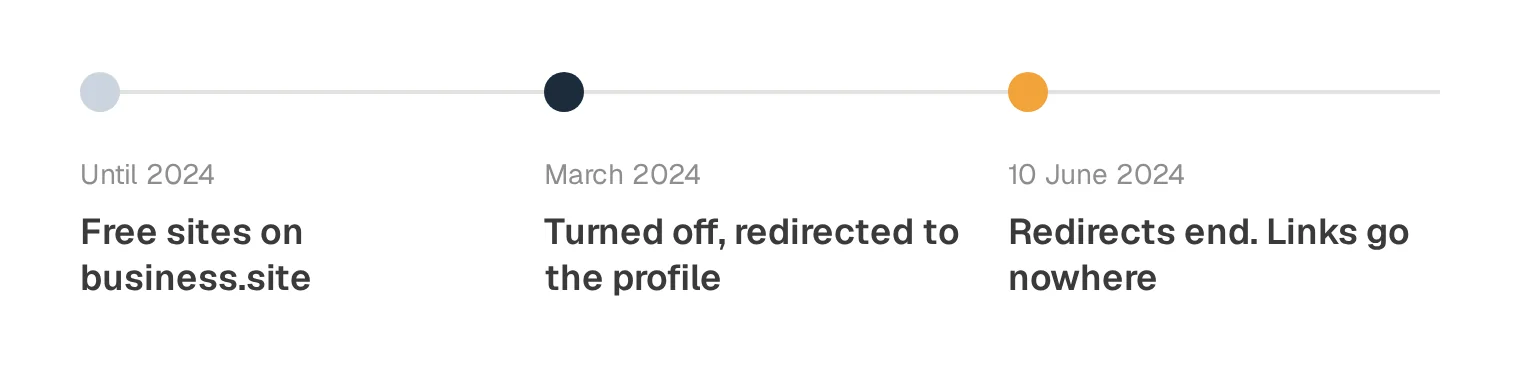 How Google's free websites ended. The redirect lasted about three months.
Nobody did anything wrong. Google simply changed its mind about a product it owned. That's the risk with any platform you don't control, and it's the strongest argument for having something that's yours.
Why customers still look you up
People rarely book a tradesperson from a map pin alone. They want to know whether you do their kind of job, roughly what it costs, and whether you look like someone they'd let into their house.
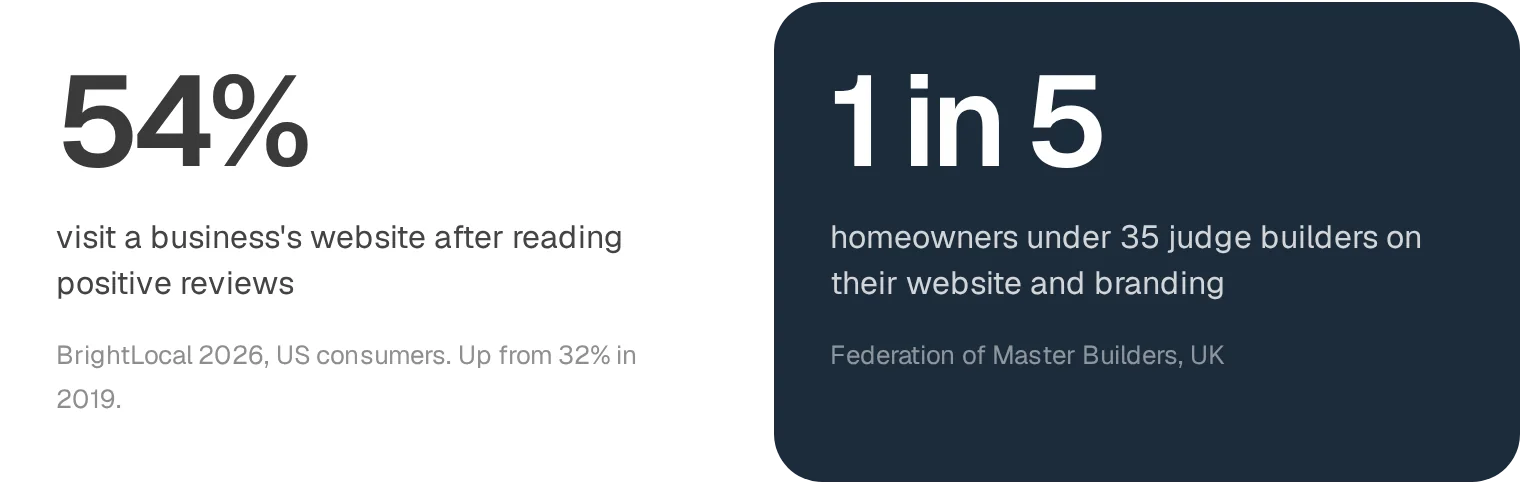 Two signals from recent research. The BrightLocal figure is from US consumers.
BrightLocal's 2026 survey of US consumers found that 54% visit a business's website after reading positive reviews, up from 32% in 2019. Closer to home, the Federation of Master Builders found that one in five homeowners under 35 judge builders on their website and branding.
Reviews get you shortlisted. Your website often decides who gets the call.
What a profile can't do
A Business Profile is built for a quick glance. It's deliberately limited, and there are things customers want that it simply doesn't hold well.
| Customers want to know | Profile | Website |
|---|---|---|
| Do you do my kind of job? | A list of services | A page for each, with photos and detail |
| Roughly what will it cost? | Not really | Guide prices and what affects them |
| Are you qualified? | A line of text | Accreditations, certificates and insurance |
| Have you done jobs like mine? | A few photos | Before and afters, by job type |
| Can I send details now? | Messages, if switched on | Your own enquiry form, sent to you |
| Will you still be there? | Only if Google keeps it live | On your domain, as long as you want |
Your website feeds your profile, and AI
There's a less obvious reason too. Google uses your website to understand and trust your profile. The same name, address, phone number and services on both helps confirm you're real, and a link from your profile to a proper site is a signal in its own right.
AI tools lean on websites even more. When someone asks ChatGPT or Google's AI Mode for a good electrician nearby, the answer is built from pages it can read and quote. A profile gives it your rating. A website gives it the facts: what you do, where, how much and why people trust you. Our guide to GEO explains how that works.
When a profile alone is enough
To be fair, some businesses get by without a website, at least for a while.
- You're fully booked from referrals and don't want more work.
- You're testing a new side business and want to see if there's demand.
- You only work for a few repeat clients, like a contractor for one firm.
For everyone else, a profile without a website means relying on one company's product decisions for your entire online presence. And if your profile is ever suspended, even by mistake, you have nothing to fall back on while you appeal.
It doesn't have to be a big job
The reason many trades skipped a website was cost and hassle. A few thousand pounds to an agency, then weeks of back and forth. That's changed. A site built from the details already in your Google profile can be live in an afternoon, with your reviews, photos, services and areas pulled in for you.
The best setup is both: a well-kept Business Profile that gets you found, linked to a website that gets you chosen.
Questions people ask
Can I still use business.site?
No. Google turned off Business Profile websites in March 2024, and redirects stopped in June 2024. If you still have a business.site address on your van or cards, replace it.
Will a website help my Google Maps ranking?
It can. Google looks at how relevant and prominent your business is, and a website with clear services and locations helps it understand both. It also gives your profile a proper link to send people to.
What should be on a trade website?
Your services, the areas you cover, guide prices, accreditations, reviews, photos of real jobs and a simple way to get in touch. Five or six clear pages beat thirty thin ones.
How much does a website cost?
It ranges from free builders to several thousand pounds for an agency. Avago is free to build and £34.99 a month to publish. Our cost guide compares the options.