
-1920w.webp)



.svg.png)




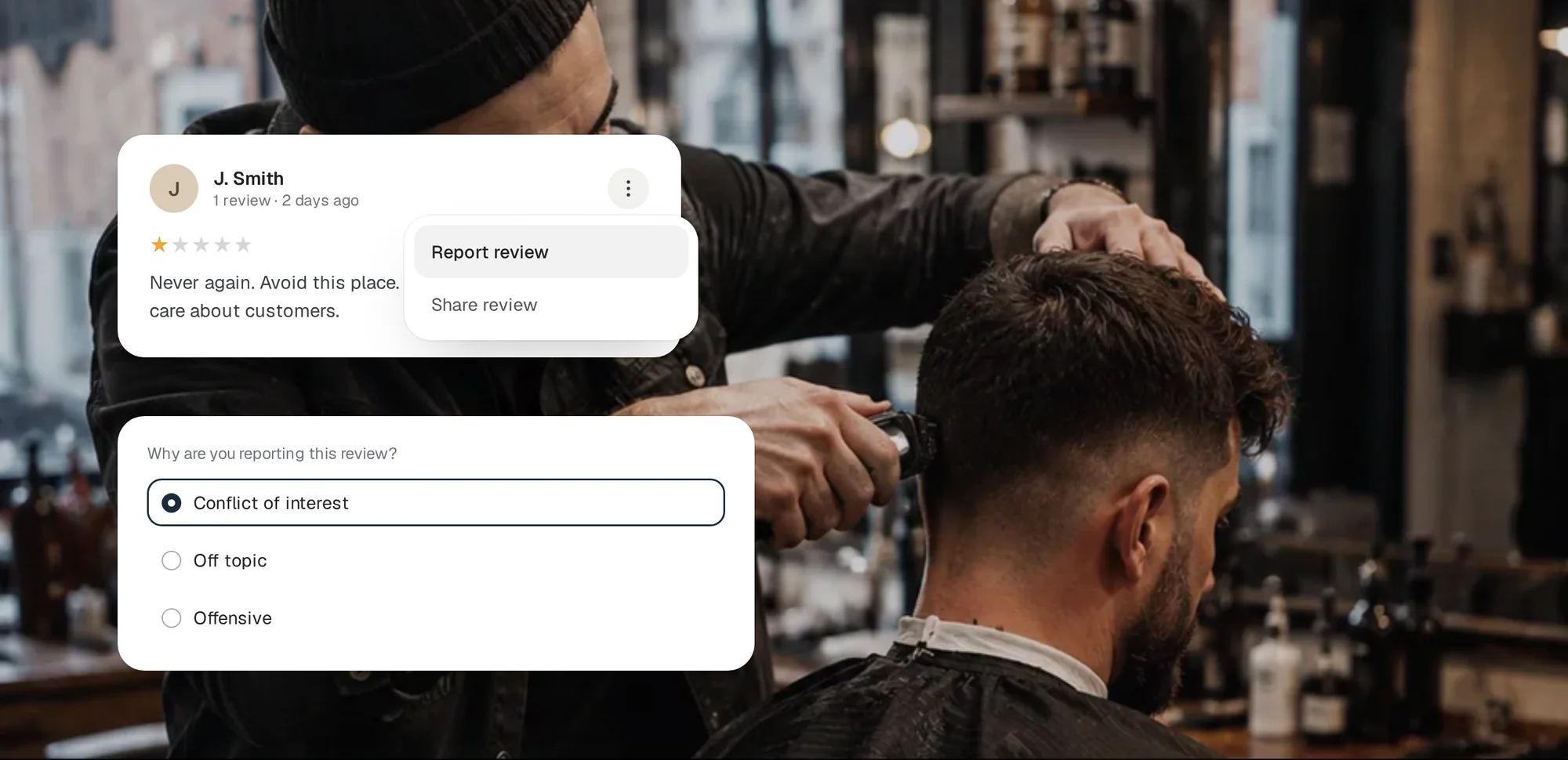
A one-star review from someone you've never worked for can feel personal, and the first instinct is to get it taken down. Sometimes you can. Often you can't. Knowing which is which saves you hours of reporting reviews Google will never remove, and points your energy at the ones it will.
The short version
Google doesn't remove reviews because they're negative, unfair or inaccurate in your view. It removes reviews that break its content policy. Respectful negative reviews are allowed, even when they sting.
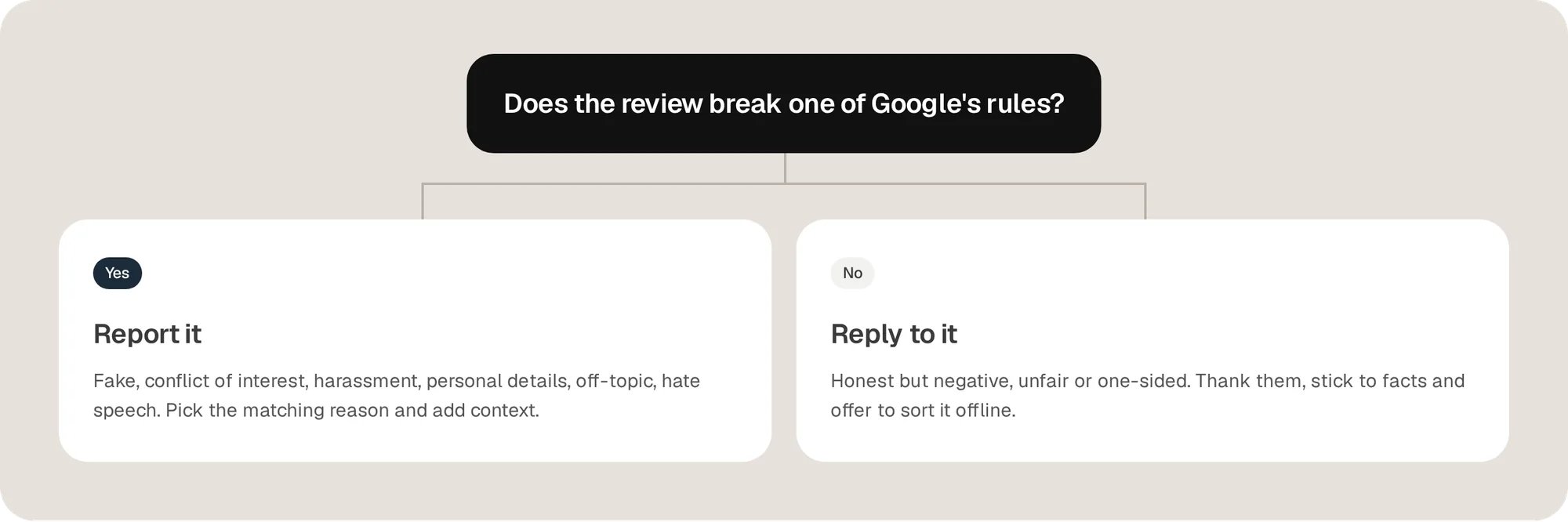 Start with one question: does the review break one of Google's rules?
Reviews Google will remove
Google's policy for reviews on Maps lists the content it doesn't allow. For a local business, these are the categories that come up most:
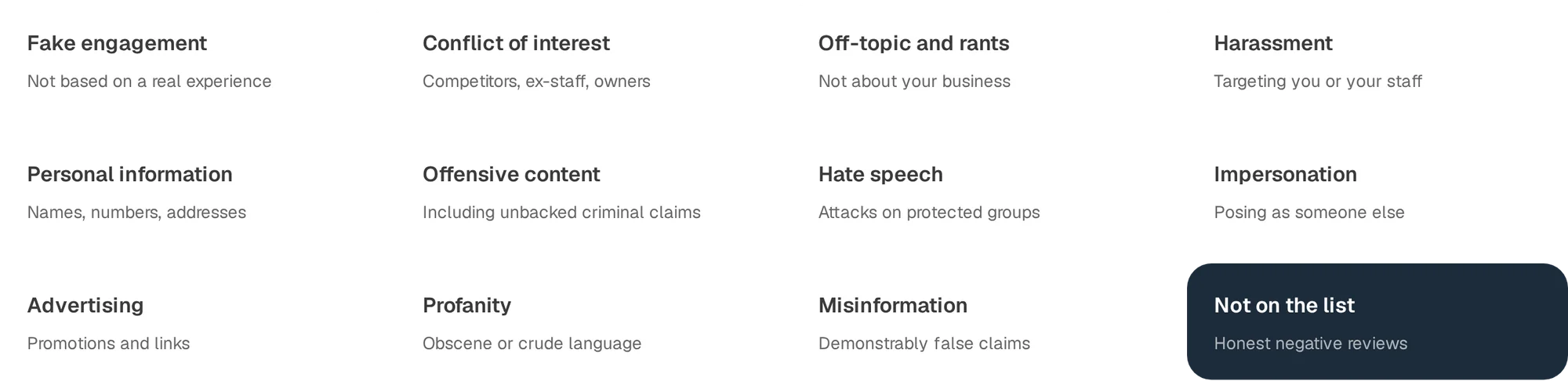 The policy categories most relevant to local businesses. The full list is on Google's policy page.
A few of these need explaining.
Conflict of interest covers reviews from competitors, former employees and the business owner. If you can show a review came from a rival firm or a disgruntled ex-employee, say so in your report.
Offensive content includes "unsubstantiated allegations of unethical behavior or criminal wrongdoing". A review that calls you a cowboy is opinion. One that accuses you of theft with nothing to back it up may qualify.
Off-topic content covers reviews that aren't about a real experience with your business, such as political rants, reviews meant for another company, or complaints about something you don't do.
Fake engagement covers reviews that aren't based on a genuine experience, including review bombing after a social media post or a news story.
How to report a review
There are two ways to report a review. Start with the first. If it's not removed, use the second, which lets you track the report and appeal.
From your Business Profile
- Open your Business Profile while signed in as the owner or a manager.
- Choose Read reviews.
- Find the review and select Report next to it.
- Choose the reason that fits best and select Send report.
Pick the reason carefully. A report filed under the wrong category is easier to refuse.
Through the Reviews Management Tool
Google's Reviews Management Tool lets you report reviews, check what happened to earlier reports and appeal decisions.
- Open the Reviews Management Tool and confirm your email address.
- Select your business and choose Continue.
- Choose Report a new review for removal, then select the review and report it.
- To follow up, choose Check the status of a review I reported previously and appeal options.
 From report to decision. Google says evaluation typically takes several days, and you get one appeal per review.
Google says review evaluation "typically takes several days". If it decides a review doesn't break the rules, you can appeal once per review, and you can include up to 10 reviews in a single appeal. Use the appeal to add context you didn't give the first time, like evidence that the reviewer was never a customer.
What to do when a review stays up
Most negative reviews won't be removed, so the reply matters more than the report. Future customers read your response as closely as the review. A calm, specific reply often wins more trust than a page of five-star ratings.
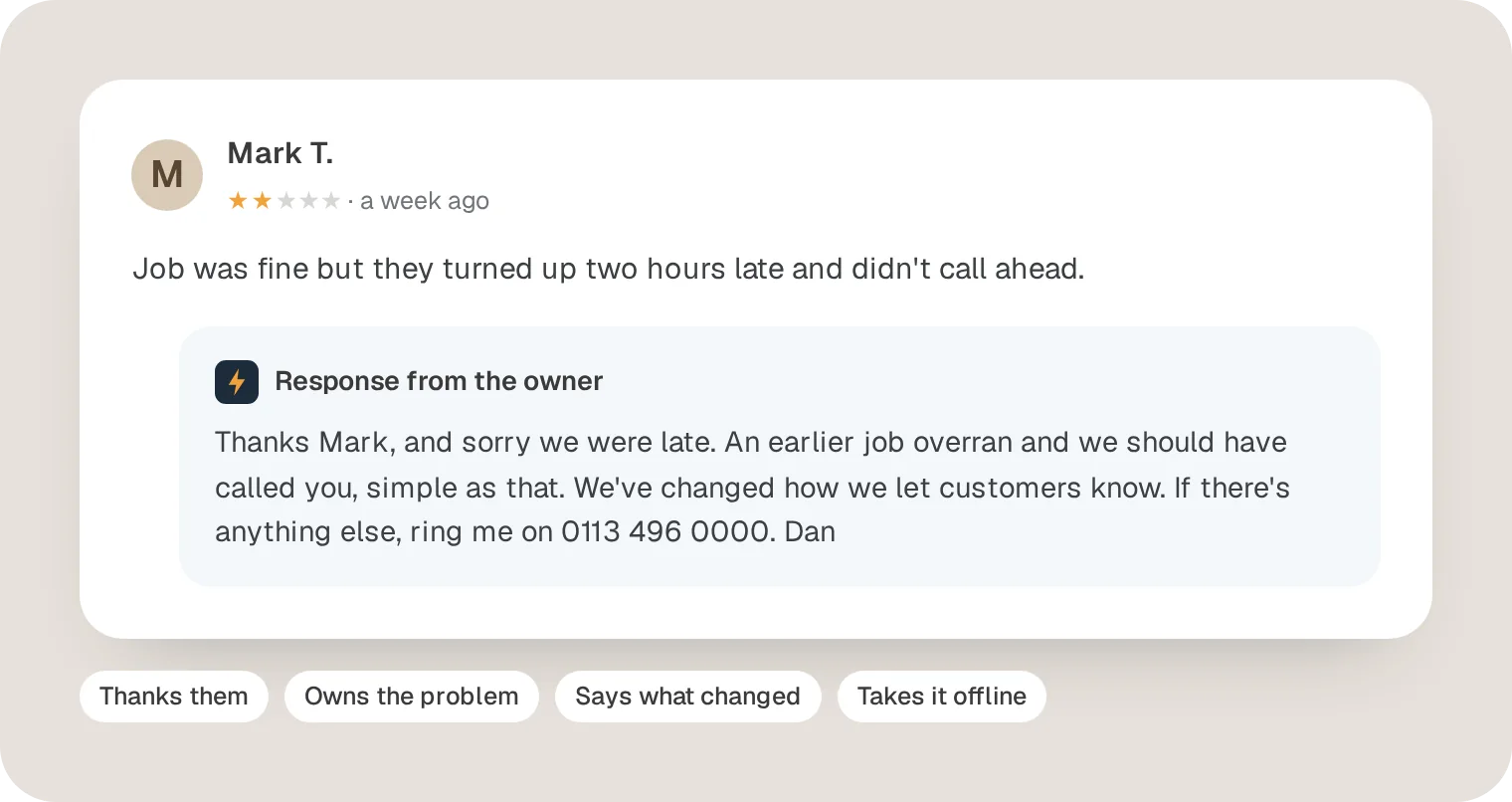 A reply that works: thank them, stick to facts, take it offline. Never argue in public.
- Reply within a day or two, while it's fresh.
- Keep it short and polite. Acknowledge the experience, even if you see it differently.
- Stick to facts. Don't share the customer's personal details or job specifics they wouldn't want public.
- Offer to sort it offline with a phone number or email.
- If they were never a customer, say so politely: "We can't find any record of working with you. Please get in touch so we can look into it."
And keep asking happy customers for reviews. One bad review among a steady stream of good ones barely moves your rating. Our guide to getting your Google review link shows how.
What the law says in the UK
Since 6 April 2025, the Digital Markets, Competition and Consumers Act has made fake reviews and concealed incentivised reviews a banned practice. That cuts both ways:
- You can't post fake reviews about yourself or a competitor, or pay someone else to.
- You can't hide genuine negative reviews or publish reviews in a misleading way on your own website.
- The CMA can fine businesses up to £300,000 or 10% of worldwide turnover, whichever is higher.
Google has also agreed with the CMA to sanction UK businesses that use fake reviews, sanction the people who write them, and show warning alerts on offending profiles.
If a review is defamatory, meaning a false statement of fact that seriously harms your business, that's a legal matter rather than a Google policy one. Get advice from a solicitor before you respond.
Things that will make it worse
- Offering a refund or discount to remove a review. Google's policy bans incentives to change or remove negative reviews.
- Asking friends to report it en masse. Repeated reports don't speed things up and can look like manipulation.
- Flooding your profile with fake five-stars. It breaks the rules and the law, and Google can pause new reviews or put a warning on your profile.
- Arguing publicly. It's the reply future customers remember.
Questions people ask
How long does Google take to remove a review?
Google says evaluation typically takes several days. You can check the outcome in the Reviews Management Tool.
Can I remove a review if I've fixed the problem?
You can't remove it yourself. You can ask the customer whether they'd update it, as long as you don't offer anything in return.
Will reporting a review hurt my profile?
No. Reporting reviews that break the rules is what the tool is for. Just don't report honest reviews in bulk.
Can I see who left an anonymous review?
No. Google doesn't share reviewer details. If you think it's a competitor or ex-employee, explain why in your report.