
-1920w.webp)

.svg.png)


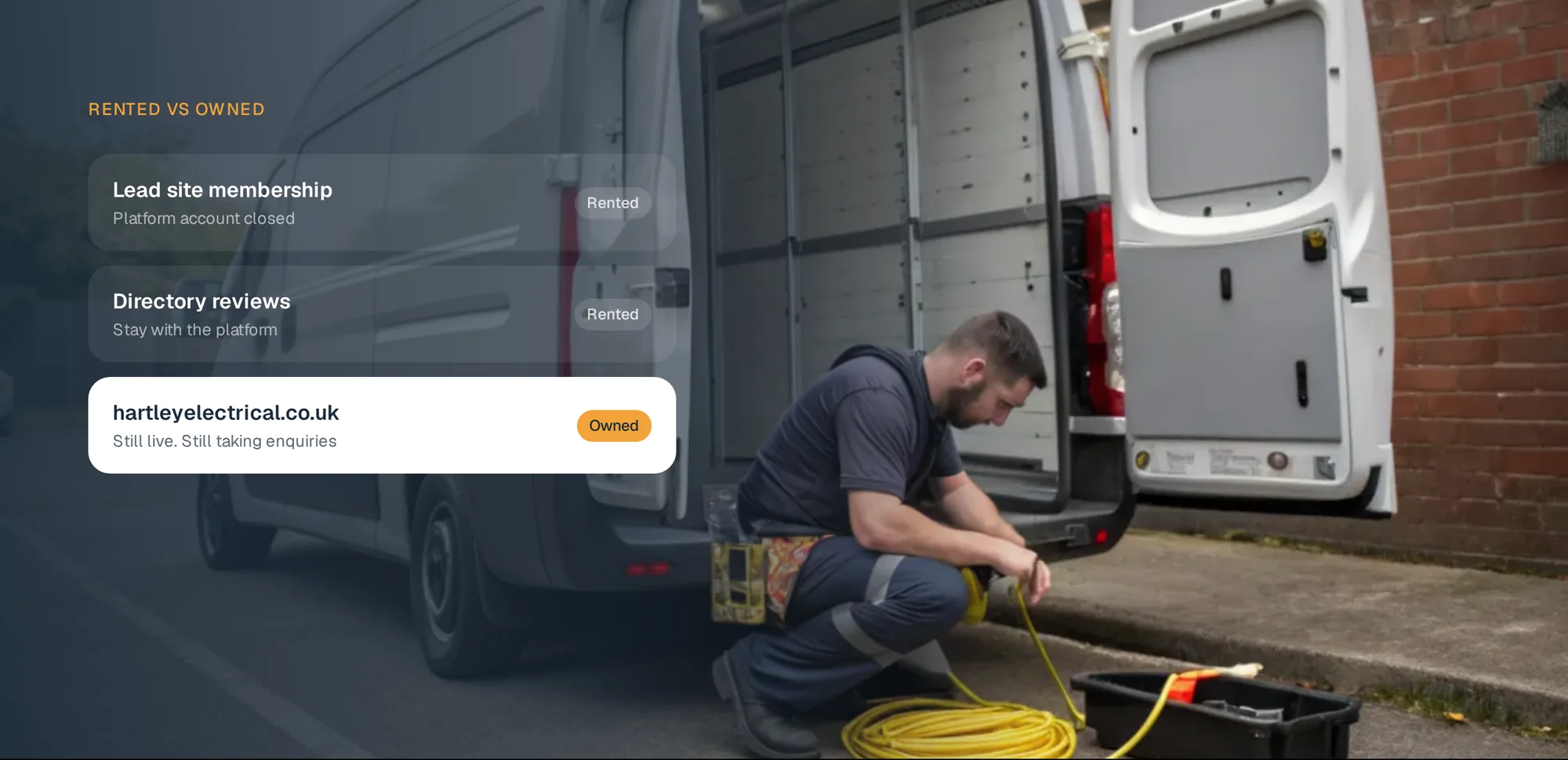
On 16 September 2026, tradespeople who relied on Rated People found their accounts closed. The company had gone into liquidation. Within two days, the brand belonged to Checkatrade, and the jobs that used to come through Rated People were going to Checkatrade members instead. Years of profile building, gone in a week.
Nobody on Rated People did anything wrong. They were renting, and the landlord left.
What renting looks like
Most trades rent more of their marketing than they realise. Renting isn't bad. It's how most businesses get started. But it helps to be honest about which is which.
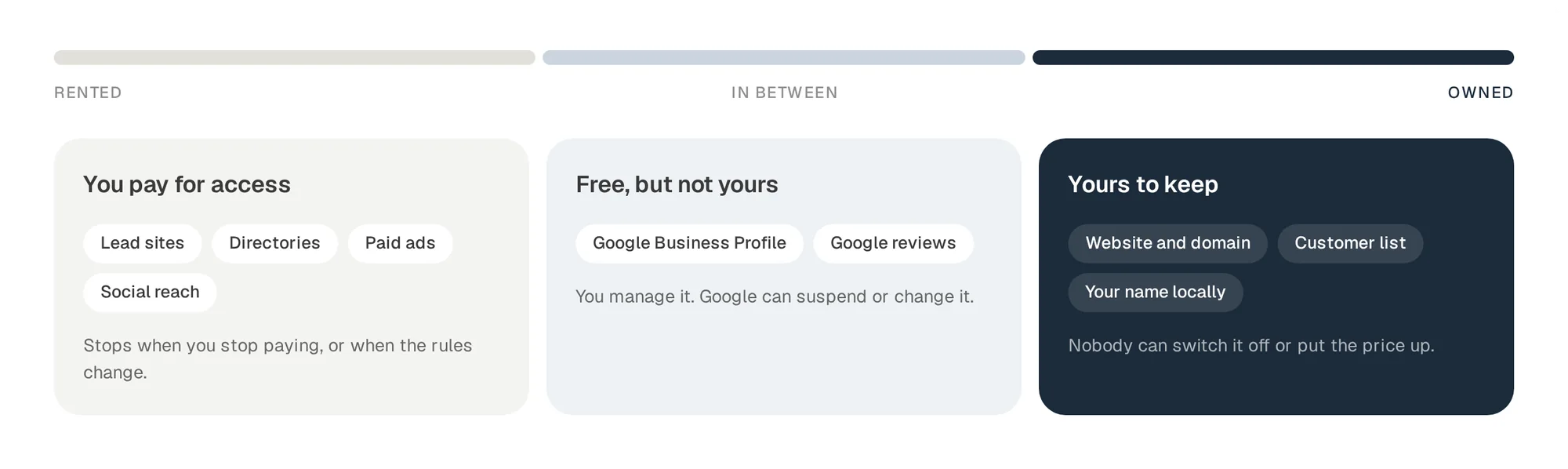 Where your customers come from, from fully rented to fully owned.
Rented channels belong to someone else. You pay for access, and the platform sets the rules: lead sites, directories, paid ads, social media reach. When you stop paying, or they change the rules, the flow stops.
Owned channels are yours. Your website and domain, your phone number, your list of past customers, your van and your reputation in the area. Nobody can take them away or put the price up.
In between sits your Google Business Profile. It's free and it's yours to manage, but Google owns the platform. It can suspend a profile, as many trades have found, or switch off a feature entirely, as it did when it shut down Business Profile websites in 2024.
The three costs of renting
The price goes up when it works
Lead platforms price by demand. Checkatrade, for example, prices lead plans by trade, postcode and competition. If your area gets busier, or your trade gets more popular, your costs follow. Your success makes the platform more valuable, and you pay for it.
The reputation stays behind
Every five-star review on a directory builds that directory's brand as much as yours. Checkatrade describes reviews as "a permanent part of a trade's profile", and if you leave and rejoin, only a limited number may be republished. On Rated People, reviews "stay where they are" even though the memberships have closed.
The customer belongs to the platform
When a customer finds you through a platform, they often go back to the platform next time. The second job, the one that should cost you nothing, gets sold to you again, or to a competitor.
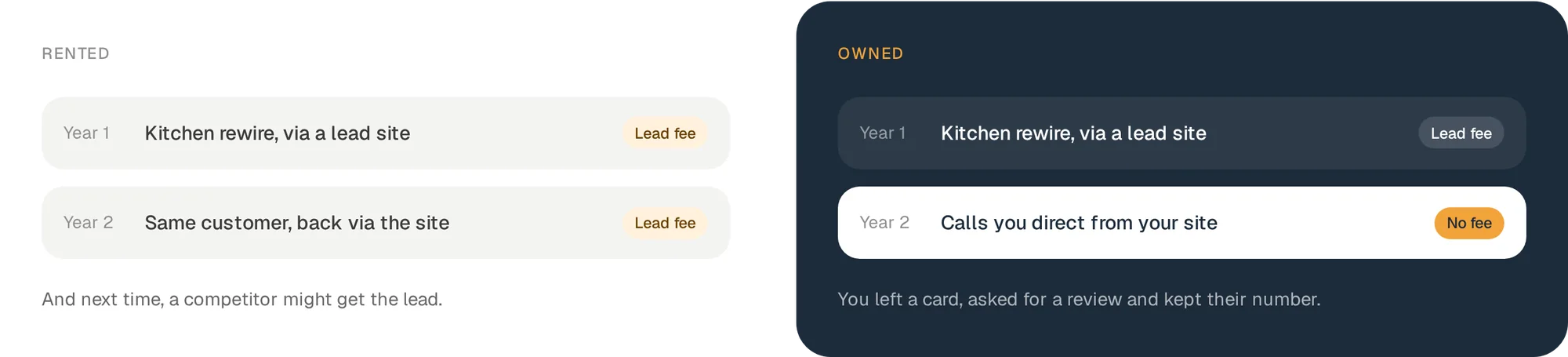 The same customer, two years running. Rented, you pay for the second job too.
What owning looks like
Owning doesn't mean quitting every platform tomorrow. It means making sure that every customer a platform sends you has a way back to you directly.
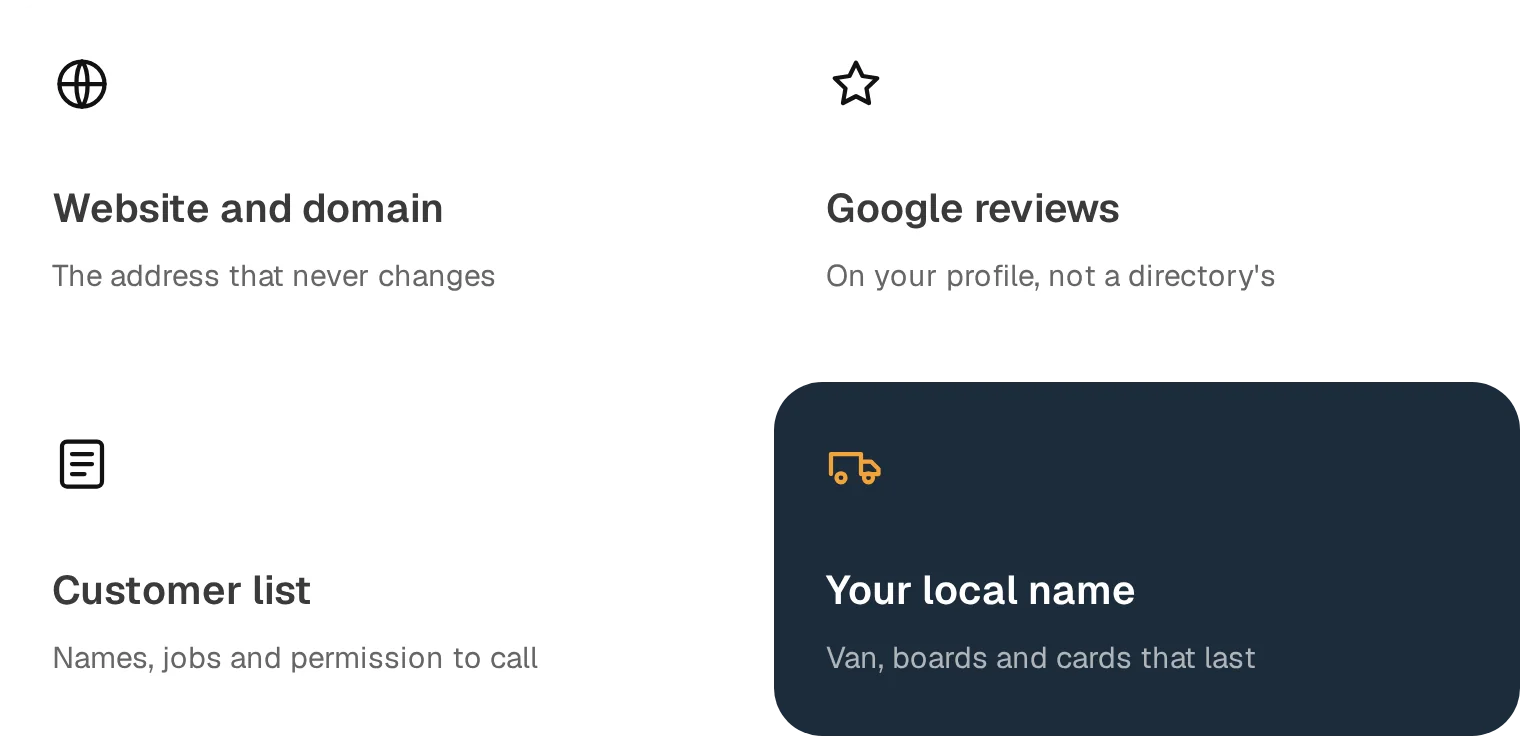 The four things a local trade can genuinely own.
- A website on your own domain. It's where Google, AI tools and customers check you out. It's the address on your van that never changes, and it's the one listing you control.
- Your Google reviews. Google owns the platform, but those reviews sit on your profile, not a directory's. Ask every customer, from every source, for one.
- Your customer list. Names, numbers and what you did for them, kept in a spreadsheet or job app with permission to get back in touch. It's the most valuable thing most trades never write down.
- Your local name. Van livery, site boards, a card left on the consumer unit. Physical reminders that work for years.
How to move from renting to owning
You don't need to cancel anything to start. The shift happens gradually, as direct work grows and rented spend becomes optional.
- This month: set up a proper website with your services, areas, reviews and an enquiry form. Put the address on everything.
- On every job: ask for a Google review, leave your details and add the customer to your list.
- Every quarter: check where your work came from. Note which jobs came direct, which came from platforms, and what each platform cost per job won.
- At renewal time: if direct work is covering more of the diary, reduce your lead plan or move to pay-as-you-go. Spend the difference on things you own.
- Every year: contact past customers about servicing, safety checks or seasonal work. Repeat work is the cheapest work there is.
A useful rule: for every pound you spend on rented leads, ask what you're building that you'll still have if that platform disappeared tomorrow.
The trades that last
Talk to tradespeople who've been going twenty years and the pattern is familiar. Most of their work comes from people who've used them before, or from someone who knows someone who has. Directories helped them start, but their real asset is a name people remember and a way for those people to find them again.
That used to mean a van and a phone number. Today it also means a website and a Google profile that say the same thing, and a steady stream of reviews from real customers. None of it is complicated. It just has to be yours.
Questions people ask
Should I cancel my lead site membership?
Not straight away. Use it while it pays, and track cost per job won. Reduce it as direct work grows, and time any change for your renewal window.
Is a Google Business Profile owned or rented?
Somewhere in between. It's free and you manage it, but Google owns the platform and can suspend or change it. Treat it as essential, but don't make it your only channel.
Isn't social media an owned channel?
Your account is yours, but the reach isn't. Platforms decide who sees your posts. It's closer to renting, even when it's free.
What happened to Rated People members?
Rated People closed its trade memberships after going into liquidation in September 2026. Checkatrade Group bought the brand, and jobs posted on Rated People now go to Checkatrade members.