
-1920w.webp)



.svg.png)




Checkatrade is the best-known trade directory in the UK, and for a lot of trades it's the first marketing they ever pay for. Some swear by it. Others call it the most expensive mistake they made in their first year. Both can be true, because whether it's worth it depends almost entirely on three things: what you pay in your postcode, how many of the leads you win, and what happens to your reputation if you stop.
What Checkatrade costs in 2026
Checkatrade doesn't publish a price list, because prices are set per trade and per area. Here's what it does say:
- There's no joining fee. You pay monthly once you're approved, after ID, address and document checks.
- The basic plan starts from £30 plus VAT a month. It doesn't send you leads. You're listed and vetted, and customers can find you if they search for your name.
- Lead plans cost more and vary. You choose how many leads you want across the year. The price depends on your trade, your postcode, local competition and the volume you pick.
- Bespoke plans are for businesses spending over £1,000 a month on advertising.
So the honest answer to "how much is Checkatrade?" is: ask for a quote for your trade and your postcode, and get it in writing. Two electricians twenty miles apart can pay very different amounts.
How the contract works
This is the part people miss. Fixed lead plans run for 12 months and renew automatically. You can only cancel in the renewal window, the month before your renewal date. Checkatrade says it sends reminders about 35, 14 and 7 days before.
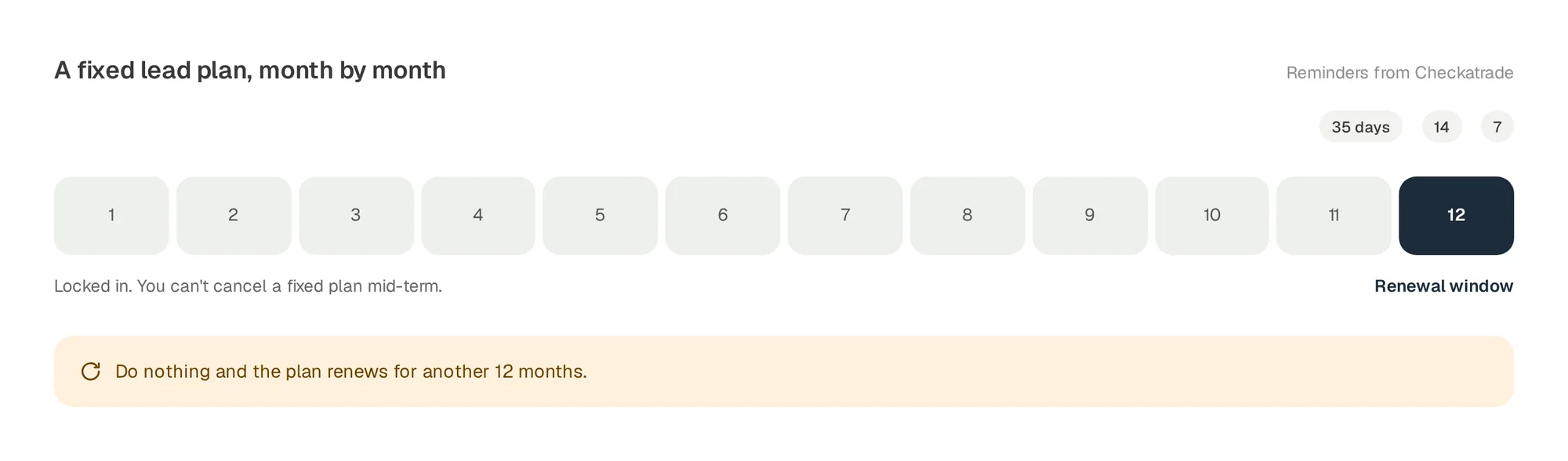 A 12-month plan. Miss the renewal window and you're in for another year.
Put the renewal date in your diary the day you sign. If you want out, give notice early in that window, in writing, and keep the confirmation.
What you lose if you leave
Your Checkatrade profile comes down from public listings on your renewal date. Checkatrade describes reviews as "a permanent part of a trade's profile", and if you come back later, it says "only a limited number of your previous reviews may be republished". You also lose access to quotes and invoices you created on the platform, so download them before you go.
In plain terms: the reputation you build on Checkatrade belongs to the listing. When you stop paying, it stops working for you.
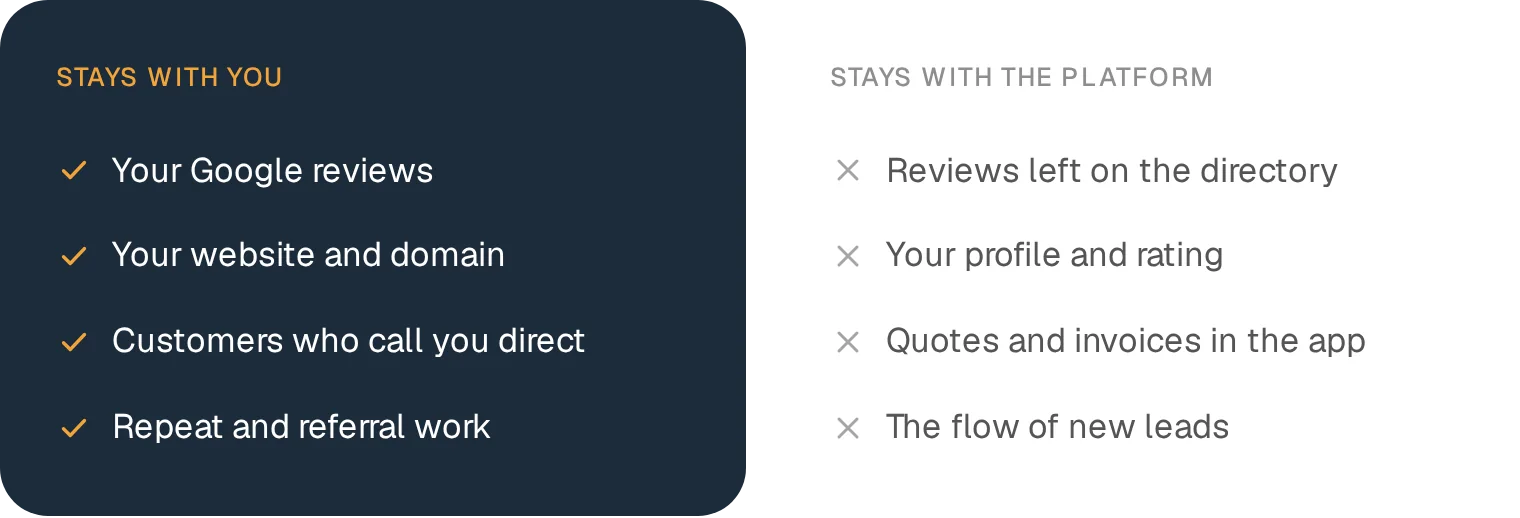 What stays with you, and what stays with the platform.
Does Checkatrade work? Run the sums
Checkatrade's own example is that 10 enquiries might lead to 3 quotes and then 1 or 2 jobs, and that "one or two extra jobs" can cover the monthly cost. That's a fair way to think about it. The question is whether those numbers hold for you.
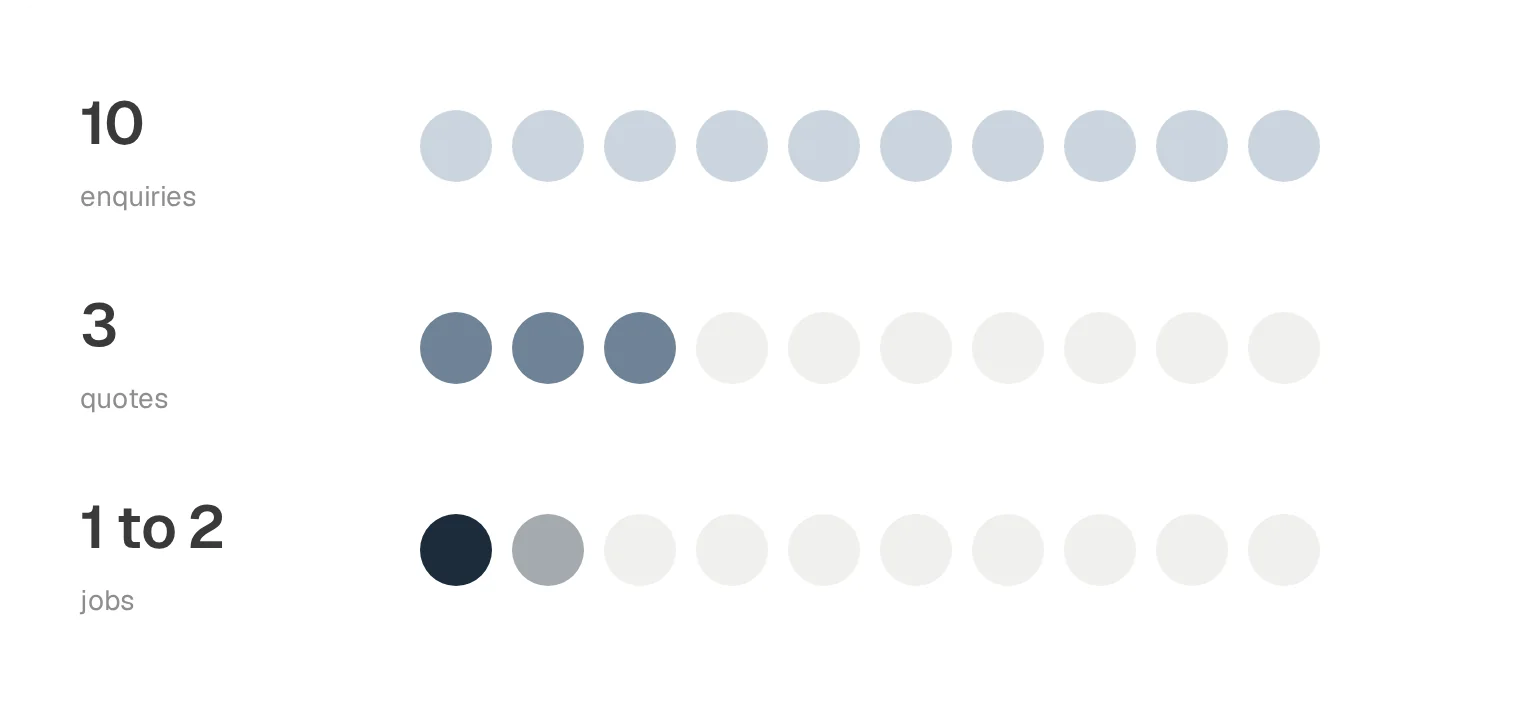 Checkatrade's own illustration of how enquiries turn into work.
You need three figures:
- Your monthly cost, from your written quote, plus VAT if you're not VAT registered.
- Your average profit per job, not the invoice total. What's left after materials and your time.
- Your win rate, the share of leads that become paid jobs. If you're new, be cautious. One or two in ten is a realistic starting point.
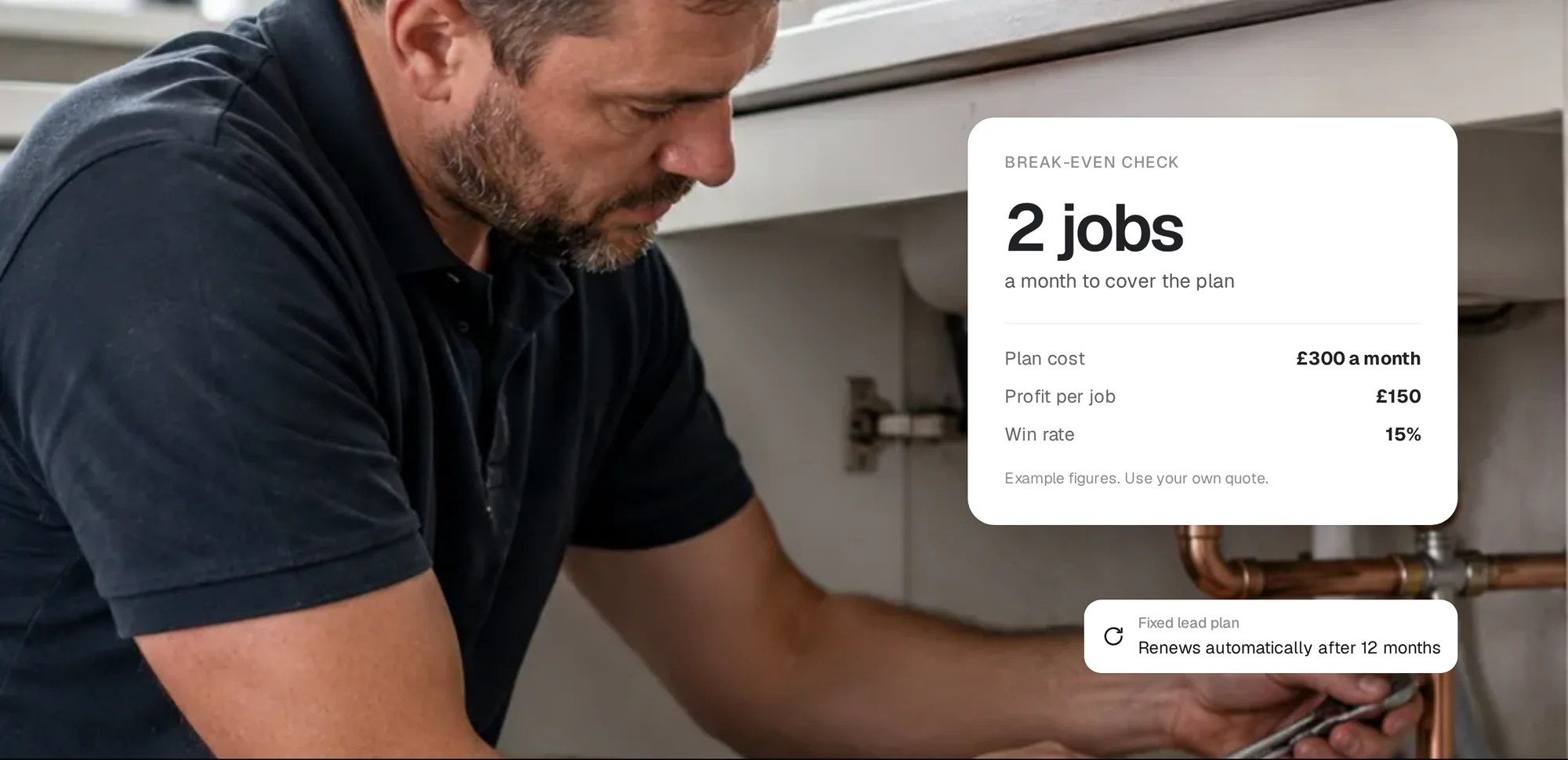
Divide the monthly cost by the profit per job to get the jobs you need to break even. Then divide that by your win rate to get the leads you need.
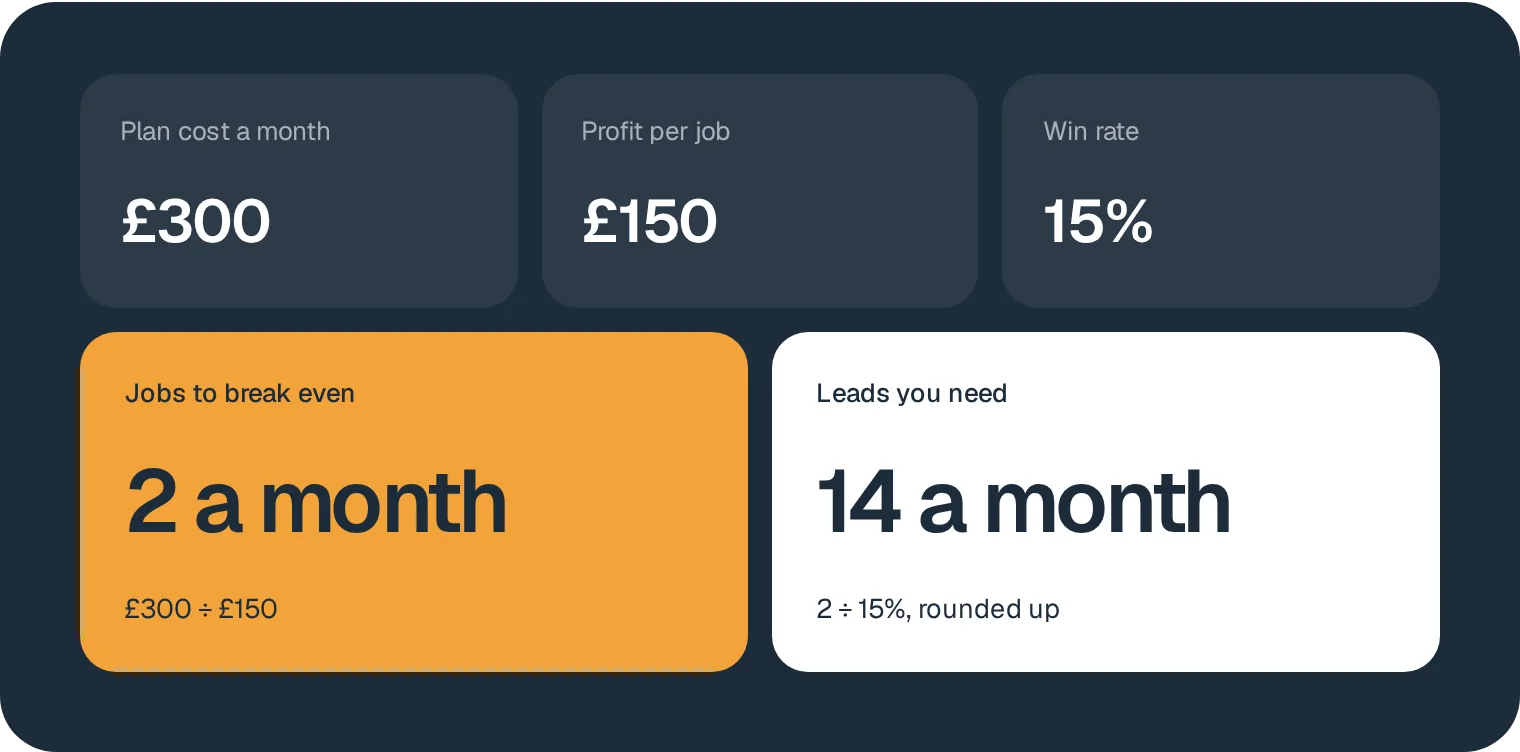 A worked example with made-up numbers. Use your own quote and your own win rate.
If the plan only breaks even at a win rate you've never hit, it isn't worth it yet, however good the sales call sounded.
When it's worth it, and when it isn't
It's more likely to pay off if:
- You've just started out or moved area and have no word of mouth yet.
- You do jobs with a healthy margin, so one win covers several months.
- You answer the phone fast and quote quickly. Speed wins directory leads.
- Your trade is one customers search for when they don't know anyone, like emergency plumbing or locksmiths.
It's less likely to pay off if:
- You're already booked weeks ahead from referrals.
- Your jobs are small and low margin.
- You can't respond to leads during the working day.
- You're relying on it as your only source of work.
What changed in September 2026
On 18 September 2026, Checkatrade Group announced it had bought the Rated People brand and website, after Rated People Ltd went into liquidation. Rated People closed its trade memberships, and jobs posted there now go to Checkatrade members. If you used Rated People, your old reviews stay where they are, but the leads now come through Checkatrade. Our lead platform comparison covers what that means for your options.
The smart way to use it
If you do join, treat it as a way to borrow customers while you build your own. Every job that comes through a directory is a chance to win a customer who calls you direct next time.
- Ask every directory customer for a Google review as well. Those stay with you.
- Leave a card or a sticker with your own number and website.
- Send a short follow-up text a year later for servicing or checks.
- Put your own website on everything, so repeat customers skip the middleman.
The aim is that by your second renewal, you need the directory less than it needs you.
Questions people ask
Is Checkatrade free for tradespeople?
No. There's no joining fee, but you pay a monthly membership. The basic plan starts from £30 plus VAT a month and doesn't include leads.
Can I cancel Checkatrade at any time?
Not on a fixed lead plan. They run for 12 months and renew automatically. You can cancel during the renewal window, which is the month before your renewal date.
Do I keep my Checkatrade reviews if I leave?
They stay with Checkatrade, not with you. Your profile comes off the public listings on your renewal date, and if you rejoin, only a limited number of old reviews may be republished.
How many other trades get the same lead?
Checkatrade doesn't publish a number. Customers can call you directly, request a quote or book through the platform. Ask your account manager how leads in your trade are shared before you sign.