
AI Can Build Your Website. It Can't Build Your Brand.

We got it.
Thank you for contacting us.We’ll get back to you as soon as possible.
Let's get something clear right from the start: AI is brilliant at building websites. It can take a description of your business and turn it into a professional-looking, fully functional website in under a minute. That's genuinely impressive, and it solves a real problem for thousands of businesses.
But here's what AI cannot do: it cannot build your brand.
This isn't a limitation that will be solved with the next model update or better training data. It's a fundamental difference between what websites are and what brands are. And understanding this difference is crucial for making smart decisions about where to invest your money.
When you use an AI website builder like Avago , what you're getting is a website that looks professional, functions properly, and communicates the basics of what your business does. The AI understands structure, layout principles, and what makes a site credible.
It knows that a restaurant needs a menu, location, and booking system. That a consultant needs to explain their services, show testimonials, and provide contact details. That an e-commerce site needs product pages, a checkout flow, and trust signals.
This is incredibly useful. For many businesses, this is exactly what they need—something that looks legitimate, captures leads, and lets them focus on actually running their business rather than wrestling with website builders or learning to code.
AI excels at pattern recognition. It's seen millions of successful websites and understands what works structurally. It can replicate those patterns efficiently and consistently. The result is professional, functional, and appropriate for the business type.
For a local plumber, a yoga instructor, a bookkeeper, or a consultant—businesses where the website is a utility rather than a primary marketing tool—this is often all that's needed. You look credible online, customers can find your information, and you can get on with your actual work.
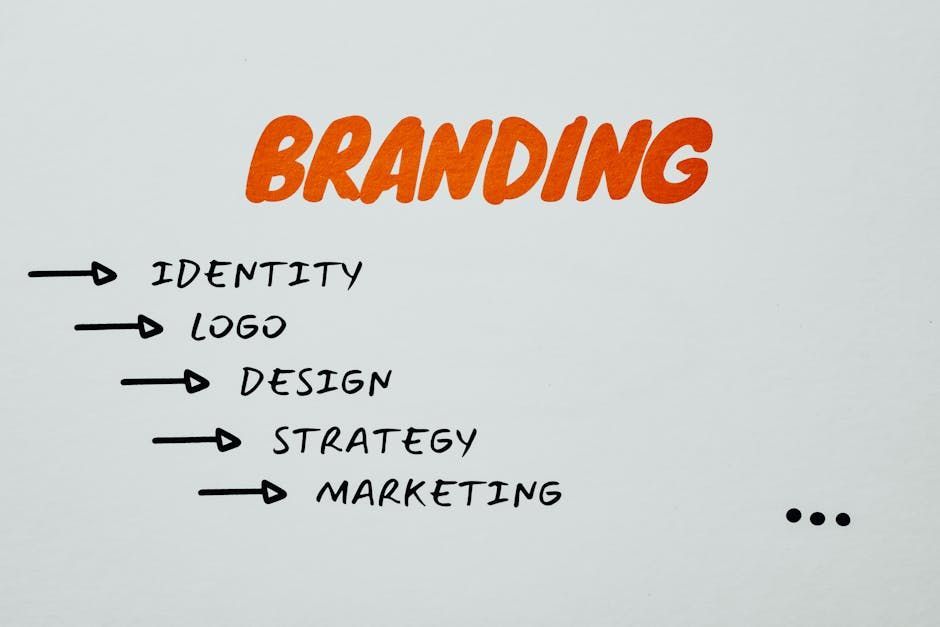
Branding isn't your logo or your colour scheme. Those are brand identity elements, but they're not the brand itself.
Your brand is how you're perceived. It's the feeling people get when they interact with your business. It's what makes customers choose you over competitors who offer essentially the same thing at essentially the same price. It's the story you tell about who you are, what you stand for, and why that matters.
AI cannot create this because branding requires strategic thinking about your specific competitive context, deep understanding of your target audience's psychology, and creative expression of something genuinely unique about your approach or perspective.
When we work with clients on branding projects, we're asking questions AI simply cannot process meaningfully: What makes you fundamentally different from competitors? Not "what services do you offer" but "why do you approach this work the way you do?" What does your ideal customer fear? What do they aspire to? How does your business connect to those deeper motivations?
We're digging into the founder's story, the company culture, the philosophy behind business decisions. We're looking for the authentic thread that can become a distinctive brand narrative. This isn't information you can prompt AI with—it's insight that emerges from dialogue, observation, and strategic interrogation.
AI is trained on existing content. It learns patterns from what already exists and generates new content based on those patterns. This is why it's so good at creating "professional-looking" websites—it knows what professional websites look like because it's seen millions of them.
But this is also precisely why it cannot create unique branding. By definition, a distinctive brand is unlike what already exists. It breaks patterns rather than following them. It says something different, looks different, feels different.
When AI generates copy, it sounds like copy that's been written before. When it creates visual layouts, they follow familiar conventions. This isn't a flaw—it's a feature. Familiarity breeds trust. Convention signals professionalism.
But distinctive branding requires departure from convention. It requires saying "everyone else does it this way, but we're going to do it differently because..." And that "because" is where the human insight lives—the strategic decision about how to position yourself uniquely in your market.
AI cannot make that decision because it doesn't understand your market context, your competitive landscape, or your customer psychology at the level needed for strategic differentiation. It can mimic the surface appearance of branding, but it cannot generate the underlying strategy.
Despite AI's limitations with branding, there are countless situations where those limitations don't matter—where what AI provides is exactly what's needed.
Service businesses where word-of-mouth is primary: If most of your customers come from referrals and recommendations, your website is primarily about looking credible when they check you out. AI handles this perfectly—you look professional, your information is clear, job done.
Businesses competing on location, price, or convenience: If you're the closest plumber, the cheapest option, or the most convenient provider, your competitive advantage isn't brand—it's practical factors. An AI-built site communicates these factors just fine.
Testing business ideas: If you're validating a concept or launching a side project, spending thousands on branding before you know if the business will work is backwards. Get something online quickly , test the market, invest in branding once you've validated demand.
Straightforward business models: Some businesses are simple to explain and have obvious value propositions. A dog walker. A house cleaner. A mobile mechanic. AI can communicate what you do clearly and professionally without needing strategic positioning work.
Budget constraints: If you genuinely cannot afford strategic design work right now, an AI-built site is infinitely better than no site, or a terrible DIY attempt, or a sketchy Fiverr job. Get online professionally with minimal cost , grow your business, invest in branding when you can.
In all these scenarios, AI's inability to create unique branding doesn't matter because unique branding isn't what moves the needle for your business. Professional presentation and clear communication are what matter, and AI delivers both.
But there are equally clear situations where branding becomes critical—where the difference between "looks professional" and "distinctively positions us" is the difference between struggling and succeeding.
Crowded markets where competitors are indistinguishable: If you're a management consultant, marketing agency, or business coach competing with hundreds of others offering essentially the same services, brand differentiation is how you win. Generic AI-generated content makes you invisible.
Premium positioning: If you charge more than competitors, you need to justify that premium through brand perception. Clients need to feel they're getting something special, not just paying extra for the same thing. AI cannot create that perception of elevated value.
Complex value propositions: If what you offer requires education, if the value isn't immediately obvious, if customers need convincing—you need strategic copywriting and positioning that AI cannot provide. Generic AI copy says what you do; strategic copy explains why it matters.
Building trust with sophisticated audiences: If you're targeting corporate buyers, investors, or discerning consumers, they'll spot AI-generated generic content immediately. It signals "we didn't care enough to invest in doing this properly." That perception kills trust.
Creating emotional connection: Some businesses succeed because customers feel something when they interact with the brand. Luxury goods. Lifestyle brands. Businesses built on personality or values. AI cannot engineer authentic emotional resonance.
Long-term competitive moats: If you're building a business meant to last decades and compete in changing markets, investing in strong branding creates lasting competitive advantage. Brand equity compounds over time in ways that functional benefits don't.
In these situations, trying to save money with AI is false economy. You're competing on dimensions where brand perception directly drives revenue, and generic AI output actively undermines your competitive position.
Here's what we actually recommend to most businesses: start with AI, upgrade strategically when you know where branding will have impact.
Build with Avago. Get online. Start trading. Learn what customers respond to. See which messages resonate. Understand what questions they ask, what objections they have, what makes them convert.
You'll learn more about your market position in three months of actually doing business than you could from any brand workshop before launch. That market learning makes your eventual branding investment far more effective because you're working from real insight rather than assumptions.
Then, when you've validated your business model and have revenue to justify investment, bring in strategic branding expertise through Avago Extra for targeted improvements, or a full agency project if you need comprehensive work.
This approach gives you speed and low risk upfront, with strategic investment once you know where it matters. You're not choosing between AI and branding—you're using both intelligently at the right time.
We've seen businesses follow this path successfully: launch quickly on AI, trade for 6-12 months, identify where professional branding would drive growth, and then invest strategically in those specific areas. Smart, staged investment rather than all-or-nothing upfront.
One specific area where the AI limitation shows up clearly is copywriting. AI can write clear, grammatically correct copy that explains what you do. What it cannot do is write strategic copy that positions you uniquely.
AI-generated copy is functional. It covers the basics. It's fine for communicating straightforward information about your services, location, and contact details.
Strategic copywriting is different. It's about choosing which benefits to emphasize based on competitive analysis. It's about understanding your customer's state of mind and speaking to their specific concerns. It's about voice and tone that reflects your genuine business personality rather than generic professionalism.
Compare these two approaches to the same business—a business coach:
AI-generated: "I help business owners grow their companies through one-on-one coaching. With 10 years of experience, I provide strategic guidance across operations, marketing, and leadership."
Strategically written: "Most business coaches have never actually built a business. They've got frameworks and theory. I've got the scars from growing three companies past £5M. The difference matters when you're facing real decisions with your money on the line."
The functional information is the same. The positioning is completely different. The second version creates clear differentiation, speaks directly to a target audience's concern (coaches without real-world experience), and uses voice to establish credibility.
AI cannot generate that second version because it requires strategic decisions about positioning, understanding of the competitive landscape, and authentic voice that comes from the individual, not from pattern-matching content that "sounds professional."
Similar dynamics apply to visual design. AI-generated design follows established patterns and conventions. This makes sites look professional and credible. It does not make them distinctive or memorable.
For many businesses, this is fine. Looking professional is the goal. But if visual differentiation is part of your competitive strategy—if you're in fashion, design, hospitality, luxury goods, creative services—generic visual identity undermines your positioning.
Custom design work isn't about making things "pretty." It's about using visual language strategically to communicate brand values and create desired perception. Colour psychology. Typography choices that signal personality. Layout decisions that guide attention and create specific experiences.
AI can replicate design patterns that work functionally. It cannot make strategic design decisions based on deep understanding of your brand positioning, target psychology, and competitive context.
When we design custom websites, we're making hundreds of small decisions—"should this feel warm and approachable or sophisticated and premium?" "Should we use bold typography to feel confident or softer elements to feel empathetic?" These decisions stem from brand strategy, not design templates.
There's a strong tendency to assume that more investment always equals better outcomes. But "good enough" is genuinely perfect for many businesses—trying to improve beyond it is waste.
If you're a local service provider and 80% of your customers come from repeat business and referrals, does a distinctively branded website with strategic positioning actually generate more business? Probably not. The AI-generated professional site is perfect—it makes you look legitimate when people check, and that's all that's needed.
If you're a consultant whose work speaks for itself and you sell entirely through direct relationships and demonstrations of expertise, does brand identity move the needle? Maybe marginally. Is it worth £8K? Probably not. Invest that money in thought leadership content or better service delivery instead.
Understanding when "good enough" is genuinely sufficient is strategic thinking in itself. Not every business benefits proportionally from every possible improvement. Sometimes the £35/month AI solution is actually optimal, not because you can't afford better, but because better wouldn't drive meaningful returns.
Rather than thinking "AI vs. branding," ask these questions:
Is brand perception your competitive advantage? If yes, invest in branding. If no, AI is likely sufficient.
Are you in a crowded market where differentiation is critical? If yes, invest in branding. If you're one of few providers or have obvious advantages (location, price, credentials), AI is likely sufficient.
Does your target audience judge quality partly through brand perception? Corporate buyers, high-end consumers, investors—they scrutinize branding as a signal. Local customers looking for a reliable plumber care far less. Match investment to audience expectations.
Is emotional connection part of your value proposition? Lifestyle brands, values-driven businesses, personality-based services—these need authentic voice and unique identity that AI cannot provide. Functional services need competent presentation that AI handles well.
What's your three-year plan? If you're building for long-term competitive advantage, invest in branding now—it compounds over time. If you're testing an idea or need something short-term, start with AI.
Most importantly: Can you articulate what makes you genuinely different? If you have a clear, compelling answer that's actually distinctive, strategic branding can amplify that difference and turn it into competitive advantage. If your honest answer is "we're pretty similar to competitors but we do good work," AI-generated content communicates that just fine.
One thing we've learned since launching Avago is that most businesses don't neatly fit "all AI" or "all custom branding." They're somewhere in between.
You might build quickly with AI, then realize your homepage copy isn't converting well—you need strategic copywriting for that key page. You might have AI generate your site structure, but need custom design for your checkout flow because that's where revenue happens. You might be happy with everything except that your messaging feels generic—you need someone to help find and articulate your actual difference.
This is why we created Avago Extra —to let you add human expertise precisely where it matters without committing to a full agency rebrand. Start with AI for speed and low cost, upgrade strategically where professional input drives returns.
It's the hybrid model that acknowledges reality: most businesses need some elements of professional branding and strategic thinking, but not necessarily comprehensive brand strategy and custom everything. Smart, targeted investment based on what actually moves the needle for your specific situation.
AI can absolutely build you a website. A good one. Professional, functional, appropriate for your business type. For many businesses, this is exactly what's needed, and spending more would be waste.
What AI cannot do is build your brand—the strategic positioning, distinctive voice, unique visual identity, and authentic storytelling that creates competitive advantage in crowded markets.
The mistake isn't using AI when you should use human expertise. The mistake is not understanding the difference between what you're getting. A professional website isn't the same as strategic branding. Both have value. They solve different problems.
Be honest about what your business actually needs. If you're competing on dimensions where brand perception drives decisions, invest in strategic branding work. If your competitive advantages are practical (location, price, specific expertise, convenience), professional AI-generated presentation is perfectly sufficient.
And if you're unsure? Start with AI. It's free to build , so there's zero risk. You'll learn quickly whether what AI provides meets your needs or whether you need something more strategic. That's vastly better than spending thousands on branding before you know if your business model even works.
The future isn't AI replacing human creativity—it's AI handling the functional basics efficiently while human expertise focuses on strategic thinking and genuine differentiation. Use both intelligently, at the right time, for the right reasons.
That's not compromise. That's smart business.
MORE ARTICLES